Why is my face red?
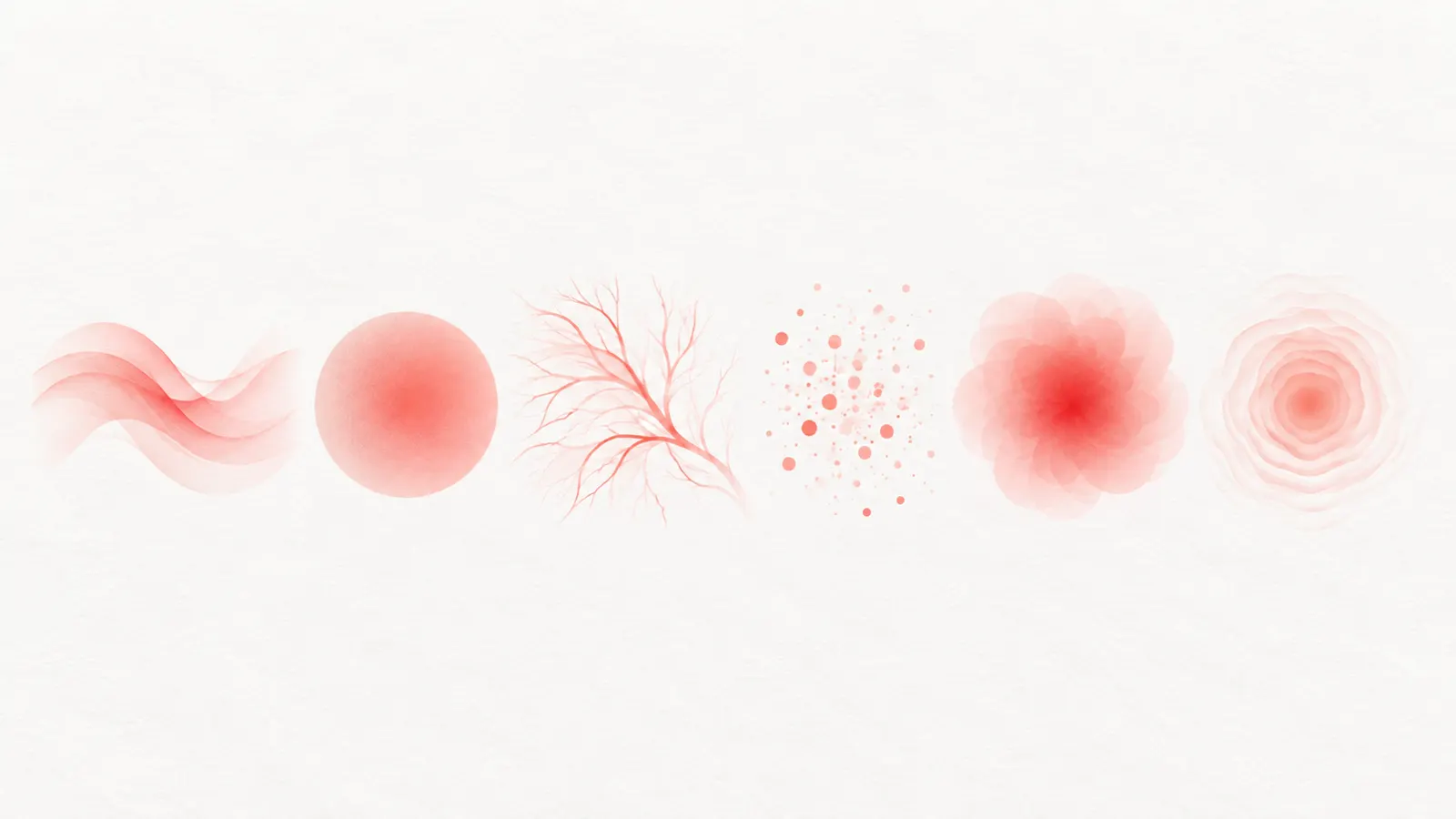
What kind of facial redness do you have?
Doctors call facial redness “erythema”. It is a sign, not a diagnosis, in the same way that a cough is a sign. Before thinking about creams or lasers, look at how your redness behaves: when it appears, how long it stays, where it sits on the face and what comes with it.
Six redness patterns and the guide to read first
- Comes and goesWarm red waves lasting minutes, often after heat, a drink, exercise or stressFlushing or persistent redness
- Stays most daysBackground redness on the cheeks, nose or chin that never fully fadesCauses of facial redness
- Thin red linesFine branching vessels around the nose and cheeksBroken capillaries
- Flat pink or red spotsMarks where acne spots healed, with no bumpRed marks after acne
- After a treatmentRedness after a laser, peel or microneedling sessionRedness after procedures
- Stings with productsBurning or tingling from skincare, sometimes with pinknessSensitive skin and the barrier
Guides

Flushing or persistent
Facial flushing comes and goes; persistent redness stays. Learn the difference, the common triggers, the alcohol flush, and which treatments suit each type.
Causes of redness
Flushing, rosacea, seborrhoeic dermatitis, product reactions, steroid creams, lupus or acne marks? Match a red face to its likely cause and know the warning signs.
Broken capillaries
Broken capillaries (telangiectasia) are small visible vessels on the nose and cheeks. See why they form and how pulsed dye, KTP, IPL and Nd:YAG lasers compare.
Red acne marks
Flat red or pink marks left after acne are post-inflammatory erythema (PIE), not scars or pigment. Learn how to tell PIE from PIH and which treatments help.
After procedures
How long redness lasts after vascular laser, fractional laser, CO2 resurfacing, peels and microneedling, what helps it settle, and when to contact the clinic.
Sensitive skin
Stinging, burning or redness from skincare? Learn what sensitive skin means, how a weak skin barrier turns the face red, and a simple routine to calm it.
Articles

How long redness lasts after laser
Redness after laser can last hours or months. Study-based findings for low-energy Nd:YAG, vascular, fractional and CO2 lasers, and how to plan treatment on a trip.

Cold-weather redness in Seoul
Seoul winters are cold and dry, and heated rooms are drier still. Why wind and indoor heating turn faces red, and a practical routine for a winter visit.
In short
Most facial redness fits one of a few patterns: redness that comes and goes (flushing), redness that stays, fine visible vessels, flat marks left by acne, and redness after a procedure or a harsh product. Name the pattern first. The likely cause, and the treatment that suits it, follow from there.
Written by the Seoul Facial Redness editorial team and medically reviewed by a Korean Board-Certified Dermatologist (AAD International Fellow · ASLMS member). Last reviewed: .
Is facial redness the same as rosacea?
No. Rosacea is one common cause, but it is defined more narrowly than many people think. An international expert panel (ROSCO) agreed that only two features are diagnostic on their own: persistent redness in the centre of the face that flares from time to time, and thickening changes such as on the nose. Flushing or visible vessels alone are not enough to call it rosacea.[1]
Seborrhoeic dermatitis, reactions to products, long-term steroid creams, sun damage and acne marks can all look similar. The decision table of redness causes puts them side by side.
Why does my face go red after one drink?
If one glass of beer turns your face red, you are not alone in Seoul. About 36% of East Asians, including Koreans, show an alcohol flushing response, mainly because of an inherited deficiency of the enzyme ALDH2.[2] This flush is a signal about how your body handles alcohol rather than a skin problem. The flushing guide explains why it matters.
What does facial redness treatment in Seoul involve?
A dermatology visit starts with your history and a close look at the skin. Treatment then follows the cause. Gentle skincare and sun protection help almost everyone. For rosacea, options include prescription creams that temporarily narrow surface vessels, medicines for bumps and pustules, and vascular lasers or intense pulsed light (IPL) for vessels and background redness; dermatitis, product reactions and acne marks each have their own treatment. A large systematic review of rosacea treatments rated the evidence for the redness creams as moderate to high and for lasers and IPL as low to moderate, mostly because the laser trials are small.[3]
Vascular devices include the pulsed dye laser, the KTP laser, IPL and the long-pulsed 1064 nm Nd:YAG laser. Not every clinic owns every device, so ask which one would be used for your redness and why. If you are visiting, read how long redness lasts after laser before you book, and how a Seoul winter affects red skin if you travel between November and March.
References
Bibliographic records retrieved from PubMed (U.S. National Library of Medicine).
- Tan J, Almeida LM, Bewley A, et al. Updating the diagnosis, classification and assessment of rosacea: recommendations from the global ROSacea COnsensus (ROSCO) panel. Br J Dermatol. 2017;176(2):431-438. PubMed: 27718519
- Brooks PJ, Enoch MA, Goldman D, Li TK, Yokoyama A. The alcohol flushing response: an unrecognized risk factor for esophageal cancer from alcohol consumption. PLoS Med. 2009;6(3):e50. PubMed: 19320537
- van Zuuren EJ, Fedorowicz Z, Tan J, et al. Interventions for rosacea based on the phenotype approach: an updated systematic review including GRADE assessments. Br J Dermatol. 2019;181(1):65-79. PubMed: 30585305